

How Rigid Boxes Are Packed and Shipped for International Orders
Rigid boxes are widely recognized as a premium custom packaging solution used for luxury products, electronics, cosmetics, jewelry, and gift items. Their strong structure and elegant appearance make them ideal for brand presentation, but their solid construction also means that special care is required when packing and shipping them internationally. Proper handling ensures that rigid boxes arrive in perfect condition despite long-distance transportation, multiple transfer points, and varying environmental conditions.
Rigid boxes are not collapsible like folding cartons, which means they occupy more space and require strategic packing methods. During international shipping, protecting both the box structure and surface finish is essential. Scratches, dents, pressure damage, or moisture exposure can reduce the visual appeal and functionality of the packaging. To prevent this, rigid boxes are first inspected for structural integrity and surface quality before entering the packing stage.
The primary step in preparing rigid boxes for export is inner protection. Each box is typically wrapped using protective materials such as tissue paper, poly bags, or foam sheets. This layer prevents friction between boxes and protects delicate finishes like matte lamination, soft-touch coating, foil stamping, embossing, or UV printing. For premium custom packaging, it’s also possible to add corner protectors to reinforce the corners, which are prone to damage.
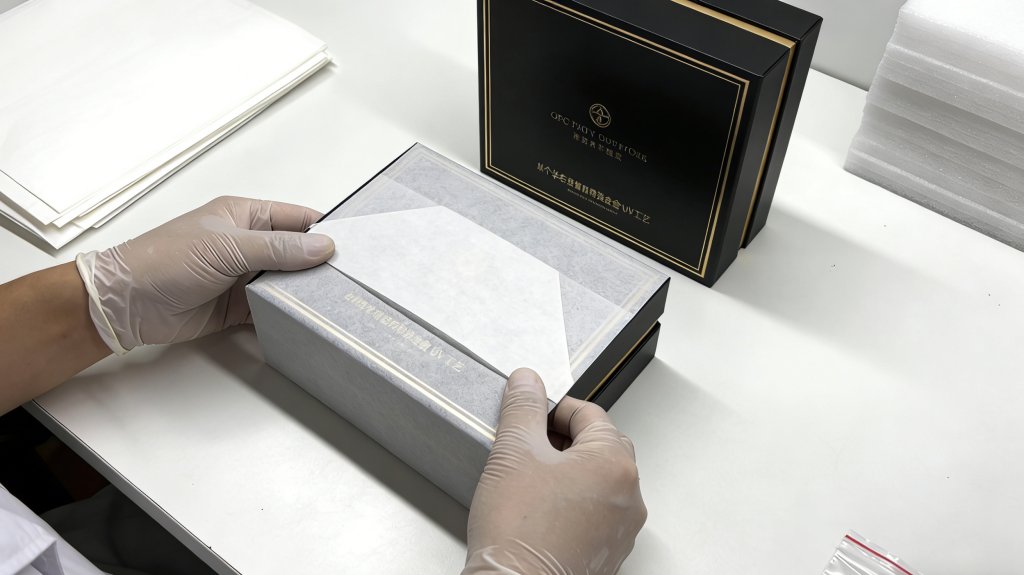
After individual protection, rigid boxes are arranged into master cartons. Carton selection plays a crucial role in international shipping. Double-wall or reinforced corrugated cartons are commonly used because they provide strong compression resistance during stacking and transit. Boxes inside the carton are arranged in a way that maximizes space while minimizing movement. Void spaces are filled with cushioning materials such as bubble wrap, kraft paper, air pillows, or foam inserts. This stabilizes the load and reduces the risk of impact damage.

Weight distribution is another important consideration. Overloaded cartons increase the risk of crushing during stacking, while underfilled cartons allow movement that can lead to abrasion. Proper carton weight standards help maintain balance and structural safety. Cartons are then sealed using strong adhesive tape, often reinforced with strapping bands for added security.
For moisture protection, especially in sea freight, additional measures are applied. International transportation may involve exposure to humidity changes, temperature fluctuations, or condensation. To safeguard rigid boxes, cartons can be lined with moisture-resistant films or include desiccant packets. Pallet wrapping with stretch film further shields goods from environmental exposure and dust.
Palletization is the next stage. Cartons are stacked neatly on pallets using interlocking patterns to improve stability. Edge boards and corner guards are added to strengthen the pallet load. Once stacked, the entire pallet is wrapped tightly with stretch film and sometimes secured with plastic or metal straps. This prevents shifting during container loading and unloading.
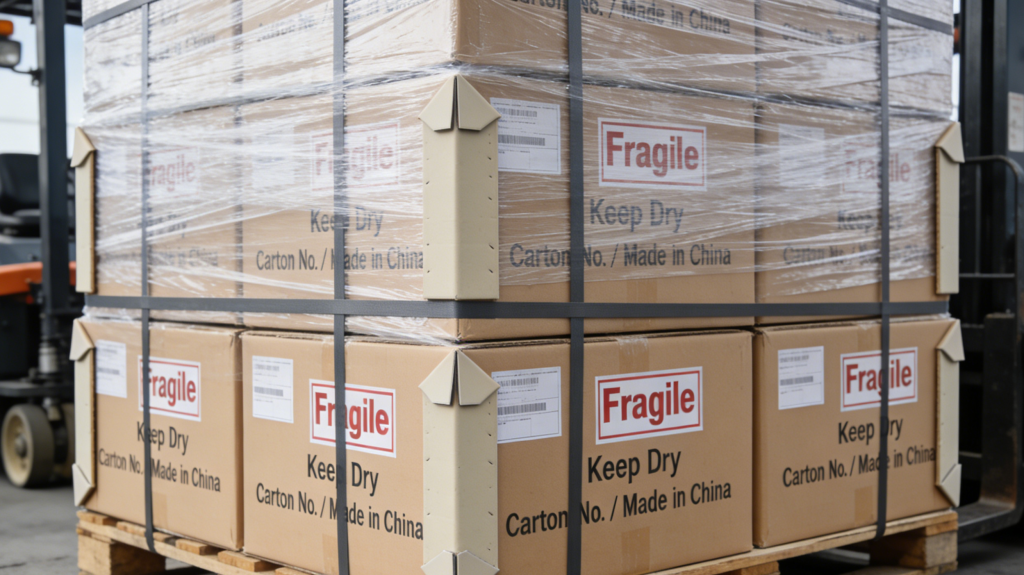
Clear labeling is also a key part of international rigid box shipping. Cartons and pallets are marked with handling instructions such as “Fragile,” “Keep Dry,” and “Do Not Stack.” Shipping labels include product details, carton counts, dimensions, and destination information. Proper documentation ensures smooth customs clearance and logistics tracking.
Before dispatch, a final quality check confirms that packing methods meet export standards. Drop tests, compression tests, or vibration simulations may be conducted for large orders to evaluate transport durability. These steps help ensure that custom packaging reaches overseas clients without deformation or surface damage.
Efficient packing and shipping methods directly impact customer satisfaction and brand image. When rigid boxes are packed professionally, they maintain their luxury appearance and protective function throughout the global supply chain. Reliable export packaging not only protects the product but also preserves the value of the custom packaging itself.