

Collapsible Rigid Boxes vs Traditional Rigid Boxes
Luxury packaging has become far more than a protective container. It serves as an extension of a brand, shapes customer perception, and directly influences purchasing decisions. As premium products continue to expand across industries such as cosmetics, electronics, jewelry, apparel, and gift packaging, choosing the right packaging structure has become increasingly important.
Among premium packaging options, collapsible rigid boxes and traditional rigid boxes remain two of the most popular solutions. Both deliver outstanding strength, exceptional appearance, and high-end presentation, yet they are designed for different business needs. Understanding the differences between these two packaging styles helps brands reduce logistics costs while maintaining a luxury unboxing experience.

Although both box types belong to the rigid packaging category, their structures, manufacturing processes, storage requirements, and transportation efficiency vary considerably. Selecting the right option depends on product characteristics, distribution strategy, branding goals, and overall packaging budget.
Collapsible rigid boxes are engineered with a foldable structure that allows them to be shipped and stored flat before assembly. Once opened, they transform into a sturdy premium box through magnetic closures, adhesive corners, or locking mechanisms. This innovative structure combines the elegance of luxury packaging with significant improvements in warehouse utilization and freight efficiency.
For businesses shipping products internationally or managing large inventories, the flat-packed design offers substantial advantages. More units can be loaded into shipping containers, warehouse space is optimized, and transportation expenses are reduced without sacrificing product presentation. These benefits have made collapsible rigid boxes increasingly popular among e-commerce brands and global retailers seeking both premium aesthetics and operational efficiency.
On the other hand, traditional rigid boxes are manufactured as permanently assembled structures. Their fixed construction provides exceptional dimensional stability, sharp corners, and flawless alignment that cannot easily be replicated by foldable alternatives. Since these boxes require no assembly before packing, fulfillment operations become faster and more consistent, making them ideal for luxury retail environments where presentation quality is the highest priority.
Another important difference lies in structural performance. While collapsible rigid boxes offer excellent durability after assembly, their final rigidity depends on proper folding and alignment. Traditional rigid boxes maintain their original strength from production through final delivery, making them particularly suitable for fragile products, luxury gifts, premium electronics, watches, fine jewelry, and high-end cosmetics.
Shipping efficiency is often the deciding factor for many businesses. Traditional assembled boxes occupy their full volume during transportation regardless of whether products have been packed inside. As a result, companies may spend considerable amounts transporting space. In contrast, foldable packaging dramatically reduces shipping volume, enabling more packaging units to fit inside each shipment and lowering freight costs across international supply chains.
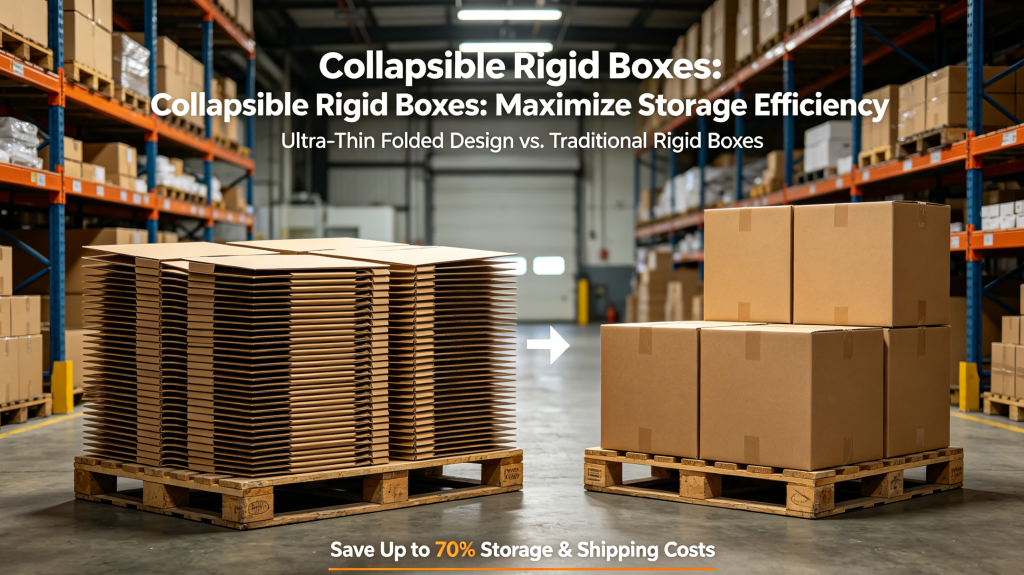
Storage efficiency follows the same principle. Warehouses storing thousands of fully assembled rigid boxes require substantially more floor space than those storing flat-packed packaging. Brands operating multiple warehouses or fulfillment centers frequently choose collapsible rigid boxes to simplify inventory management and maximize available storage capacity.
Customization possibilities are equally impressive for both packaging solutions. Premium printing technologies, including foil stamping, embossing, debossing, UV coating, soft-touch lamination, textured specialty papers, and custom inserts, can be applied to either structure. Whether choosing magnetic rigid boxes, drawer rigid boxes, lid and base rigid boxes, or collapsible rigid boxes, brands can create packaging that perfectly reflects their identity while delivering an unforgettable customer experience.
Production cost is another factor worth considering. Many buyers assume foldable boxes are automatically less expensive. In reality, the manufacturing process for collapsible rigid boxes is often more complex due to precision folding mechanisms, magnetic positioning, adhesive application, and structural engineering. Although production costs may be slightly higher, significant savings are typically achieved through lower shipping, warehousing, and inventory expenses.
Traditional structures, meanwhile, remain highly efficient to manufacture because their production techniques have matured over many years. For luxury brands focused primarily on flawless presentation rather than logistics optimization, traditional rigid boxes continue to represent the preferred packaging solution.
The intended product also influences the ideal packaging choice. Larger products such as apparel collections, electronics, beauty gift sets, and subscription boxes often benefit from foldable structures because shipping volume becomes a significant expense. Smaller products with shallow box heights may gain little advantage from collapsible construction, making traditional rigid packaging a more practical investment.
Insert compatibility should also be evaluated during package design. Traditional rigid boxes allow permanently fixed EVA foam, molded pulp, thermoformed trays, or paperboard inserts to remain perfectly aligned throughout production and transportation. While collapsible rigid boxes can accommodate removable inserts, highly engineered packaging layouts generally perform better within fixed structures.
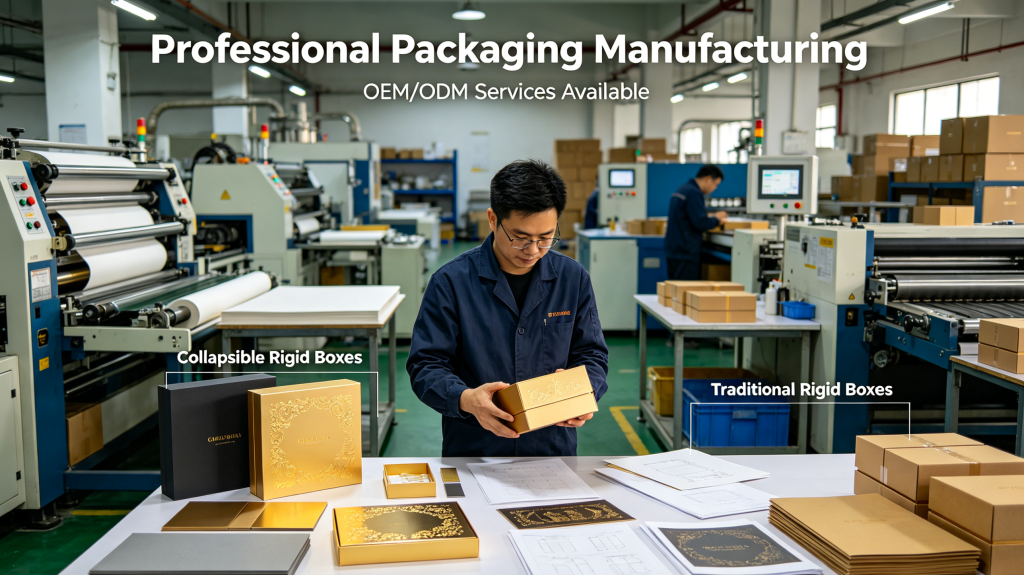
From a branding perspective, both packaging styles communicate premium quality when manufactured by an experienced supplier. High-quality materials, precise craftsmanship, luxury finishing techniques, and customized structural design contribute far more to customer perception than the folding mechanism itself. Therefore, selecting an experienced manufacturer capable of delivering consistent quality is just as important as selecting the appropriate box structure.
Ultimately, there is no universal winner between collapsible rigid boxes and traditional rigid boxes. Businesses seeking lower logistics costs, greater warehouse efficiency, and international shipping advantages will often benefit from foldable packaging solutions. Brands emphasizing impeccable presentation, superior structural precision, and premium shelf appeal may find traditional rigid packaging to be the better long-term investment.
As packaging continues to evolve alongside global commerce, selecting the right rigid box solution requires balancing operational efficiency, customer experience, and brand positioning. By carefully evaluating product requirements, logistics strategy, and marketing objectives, businesses can choose packaging that not only protects their products but also strengthens brand recognition and delivers exceptional value throughout the entire customer journey.