

Common Questions Buyers Ask Before Ordering Custom Rigid Boxes
When brands consider investing in custom rigid boxes, the decision usually goes beyond simple packaging. Rigid boxes are associated with premium positioning, product protection, and brand storytelling. Because they are a higher-end packaging solution compared to folding cartons, buyers often have detailed questions before placing an order. Understanding these common concerns helps businesses make informed choices and ensures smoother production.
One of the first questions buyers ask is about the difference between rigid boxes and regular paperboard boxes. Rigid boxes, often made from thick chipboard wrapped with printed paper, are known for their strength, durability, and luxury appearance. Unlike folding cartons, they do not collapse easily and maintain their structure during shipping and retail display. This makes custom rigid boxes especially popular for cosmetics, electronics, jewelry, gift sets, and premium consumer goods, where presentation is as important as protection.
Another frequent question involves minimum order quantity (MOQ). Rigid box production involves multiple manual and semi-automatic processes such as board cutting, wrapping, gluing, and finishing. Because of this, MOQs are generally higher than those for simple cartons. Buyers want to know how order volume affects unit price. Larger quantities typically reduce per-unit cost because setup, tooling, and labor are distributed across more units. However, order size should also match inventory capacity and product demand to avoid overstock.
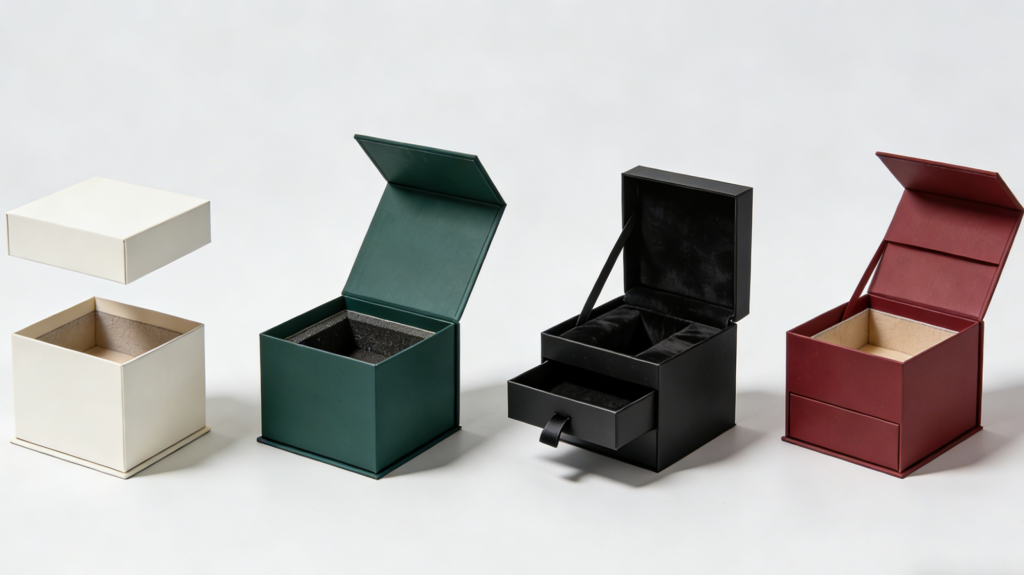
Size and structure customization are another key concern. Buyers often ask whether any shape or style can be produced. Common rigid box styles include lift-off lid boxes, magnetic closure boxes, drawer-style boxes, book-style boxes, and shoulder neck boxes. While structural flexibility is high, design feasibility still depends on production efficiency, material limitations, and shipping considerations. Well-designed custom rigid boxes balance creative structure with practical manufacturing.
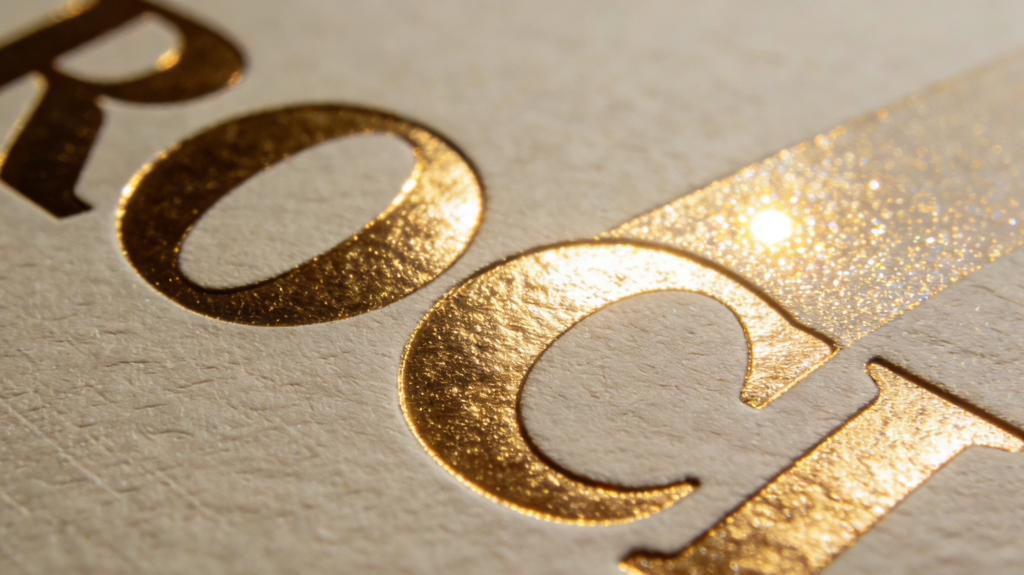
Printing and finishing options are also among the top questions. Buyers want to understand how to achieve a premium look. Common surface finishes include matte or glossy lamination, soft-touch coating, spot UV, hot foil stamping, embossing, debossing, and textured specialty papers. Each finishing technique affects cost, lead time, and visual impact. Choosing the right combination ensures the packaging aligns with brand identity without creating unnecessary production complexity.
Material quality and thickness are frequently discussed. Rigid boxes typically use greyboard ranging from 1mm to 3mm thickness, depending on product weight and protection needs. Buyers often ask how to select the correct board thickness. Thicker boards provide more strength and a heavier feel, enhancing perceived value, but also increase material cost and shipping weight. Material decisions should consider product fragility, target market expectations, and logistics.
Lead time is another important topic. Unlike standard packaging, custom rigid boxes involve multiple stages, including structural engineering, sampling, printing, mounting, finishing, and assembly. Buyers often want to know how long the full process takes from artwork approval to delivery. Production timelines can vary depending on order size, complexity, and finishing techniques. Planning is essential, especially for product launches or seasonal promotions.
Sustainability has become a growing concern. Buyers frequently ask whether rigid boxes are environmentally friendly. While rigid boxes use more material than folding cartons, they are often reusable and highly durable, which extends their lifecycle. Many manufacturers now offer FSC-certified paper, recyclable wrapping paper, soy-based inks, and plastic-free designs. Sustainable custom rigid boxes focus on responsible material sourcing and structural efficiency.
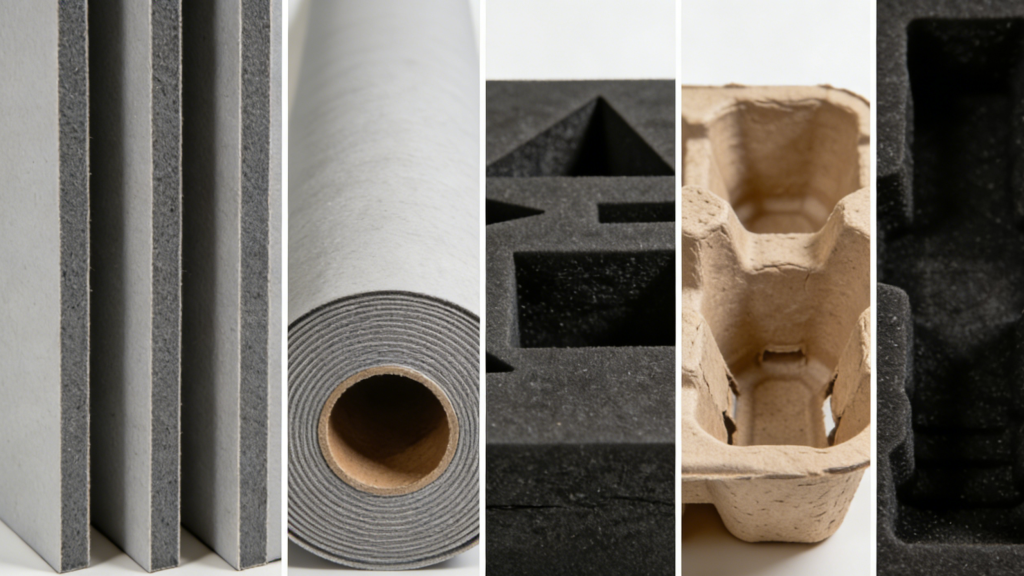
Cost breakdown is another major question. Buyers want to understand what drives the price of rigid boxes. Key cost factors include box size, board thickness, wrapping paper type, printing colors, finishing effects, inserts (such as foam or paper trays), order quantity, and shipping method. Transparent cost communication helps buyers balance budget with branding goals.
Finally, buyers often ask about samples and quality control. Physical samples are crucial for checking color accuracy, material feel, structural stability, and finishing details. A pre-production sample ensures alignment before mass production begins. Quality inspections during and after production reduce the risks of defects in bulk orders.
Choosing custom rigid boxes is a strategic decision that affects brand perception, product safety, and customer experience. Addressing these common buyer questions early allows businesses to plan efficiently, avoid delays, and achieve packaging that truly reflects product value.